
The early morning in the salt marsh is still, with only a light breeze stirring and lifting the tangy scent of pluff mud into my nostrils. Around here, that aroma means that the circle of life is continuing, with the tides washing nutrients in and out of this highly productive ecosystem. Sound waters offer passage into the winding creeks and grasses for plankton, crustaceans, and other tiny critters that in turn feed gamefish and birds. Nutrients nourish the hardy, salt-tolerant cordgrasses, illuminated lime-green in the early June dawn and the darker, contrasting gray needlerushes. It’s beautiful and inspiring, a reminder of the resilience of life here in the harsh coastal conditions. I’m not just here to watch the ebb and flow of the daily tide cycles, however.
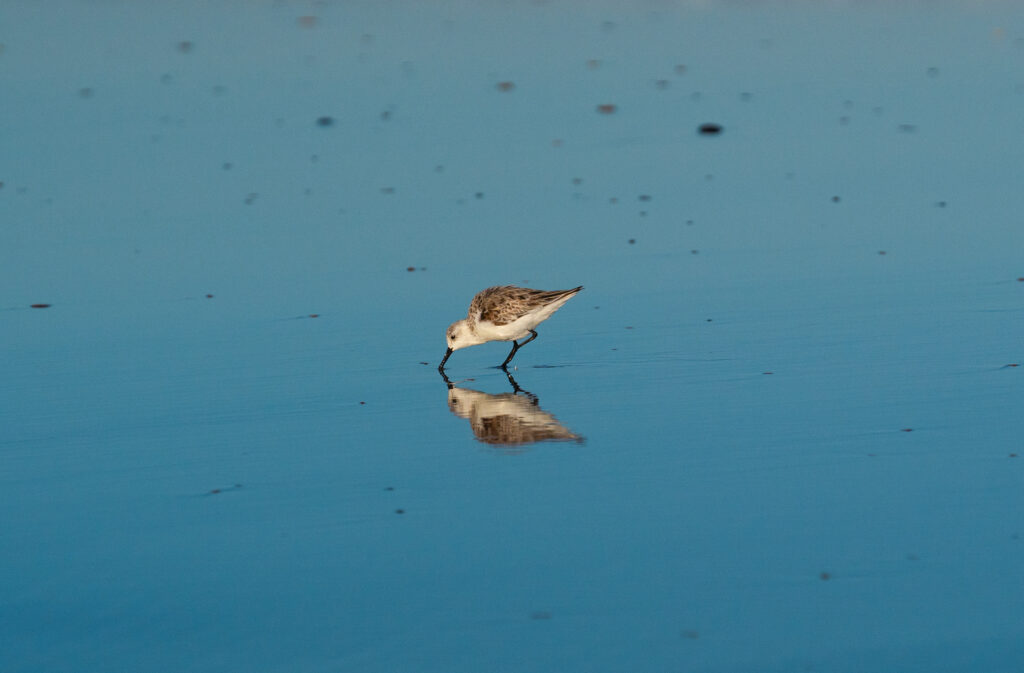
Suddenly, a sound like the sizzling hiss of liquid on a hot skillet interrupts the morning silence. While it may sound like bacon is on the breakfast menu, this decidedly unmusical buzz is actually the song of one of North America’s most specialized birds, the seaside sparrow. Like the tough marsh grasses that make their home on this dynamic boundary of land and sea, the seaside sparrow clings to a tenuous existence on the edge. Hundreds of them inhabit the extensive soundside saltmarshes of Ocracoke Island, adapted to the daily tidal changes that leave their habitat alternatively flooded and high and dry twice every twenty-four hours. Birders seeking the seaside sparrow must travel to their marshy habitat, where they are easiest to find during their breeding season in the late spring and early summer months, although they are on Ocracoke year-round. Found only in salt marshes from New England to the Texas Gulf Coast, the seaside sparrow is one of my favorite avian denizens of Ocracoke Island and a target species for nearly every visiting birder.
Spring has turned into summer and like many Ocracoke residents and visitors, I’m out on the beach. The open beach in summer may seem like a hostile environment with pounding waves, frequent storms, and searing sun sending sand temperatures well over 100 degrees. But several species of shorebirds, including American oystercatchers, piping and Wilson’s plovers, least, gull-billed, and common terns, nest only on the oceanfront. With beachfront real estate elsewhere converted to condominiums, mini-golf courses, and five-star resorts, Ocracoke’s protected, undeveloped shoreline really is for the birds. In mid-summer, the antics of fledgling oystercatchers are in full view. With their gaudy black-and-white plumage and clownish orange bills, both parents demonstrate a high degree of care for their offspring. Within about a month and a half, oystercatcher chicks grow from mottled eggs to fledgling fliers, nurtured by mom and dad with invertebrates and shellfish found in the intertidal zone. Small sections of the beach may be closed to pedestrians and vehicles to protect shorebird nests and chicks. Responsible birders should respect these protected areas and observe shorebirds from the outside, demonstrating good birding ethics and giving oystercatchers, plovers, and terns the space they need for successfully raising young.
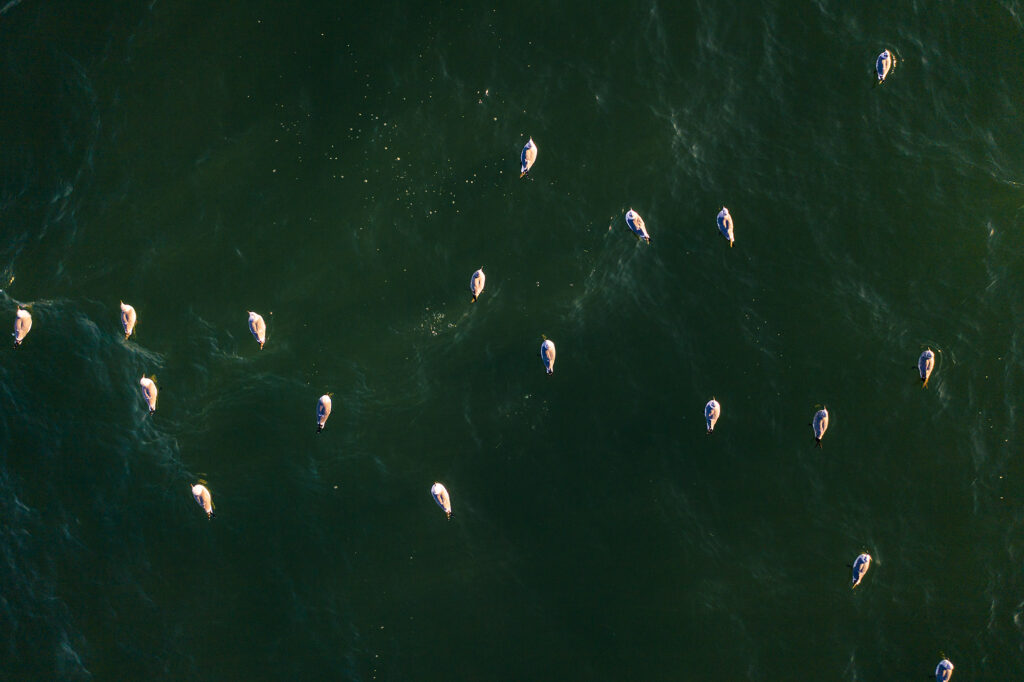
My favorite season on Ocracoke is autumn. The peak season of summer has come and gone and the intense heat and humidity is moderated by northerly and westerly breezes bringing crisp air in from the mainland. Relief from the heat isn’t the only thing brought in by the shifting weather patterns, however. Step outside during the evening or predawn hours and beneath the celestial arc of the Milky Way you’ll hear them: “zeet,” “tseep,” or a burrier “churp”. Thousands of feathered travelers are winging through the night overhead, migrating along the Atlantic coastline to wintering grounds near and far. Ocracoke doesn’t just offer rest and relaxation for human visitors – over 5,000 acres of natural habitat on the island make the wooded hammocks, grassy meadows, and expansive wetlands an ideal stopping ground for southbound avian migrants. During September and October, dozens of species of warblers, vireos, cuckoos, sparrows, shorebirds, rails, raptors, and many other birds delight the astute observer. After the passage of a cold front, village woodlots can be literally dripping with neotropical migrants, and other good places on the island for spotting migrating songbirds include Hammock Hills Nature Trail and the Ocracoke Pony Pasture, both located northeast of the village within Cape Hatteras National Seashore.
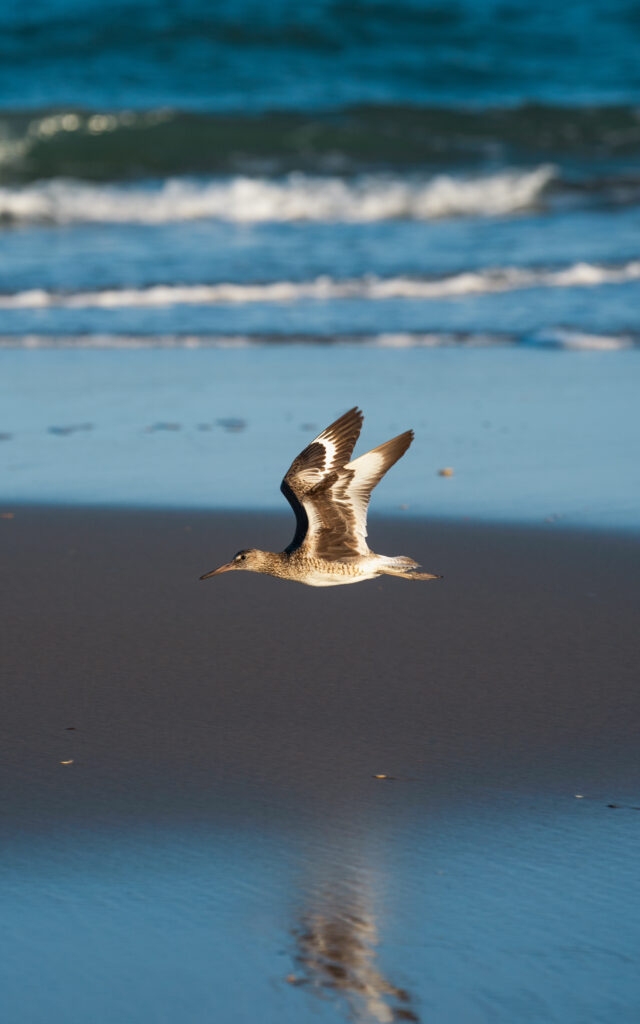
Winter on Ocracoke Island is often blustery, but the hardy beachcomber can be rewarded by numerous birds wintering here from more northern latitudes as well as our stalwart resident species. On a calm day, a trip to the beach is frequently punctuated by dozens of “plunk”, “plunk” sounds and the incredible acrobatics of northern gannets diving into schools of forage fish just beyond the breakers. Large flocks of gulls congregating on the beach can keep the birder looking for an identification challenge occupied for days- with the most common wintering species including herring, great black-backed, lesser black-backed, ring-billed, and Bonaparte’s gulls. Other winter wanderers that birders should keep an eye out for include razorbills, dovekies, purple sandpipers, and any of the myriad waterfowl species that inhabit the sounds, marshes, and inlets surrounding the island.
Each season on Ocracoke brings different species of avian visitors, as the island is a true birder’s paradise year-round. The careful observer can document over 200 species on the island over the course of the year. Favorite locations for birding include South Point Road/ Ramp 72 for marsh birds such as rails, egrets, bitterns, herons, marsh and sedge wrens, and seaside, saltmarsh and Nelson’s sparrows. Hammock Hills Nature Trail and the adjacent Devil Shoals Road offer woodland habitat for migrant species in spring and fall, as well as breeding birds like blue grosbeak and orchard oriole. The Ocracoke Pony Pasture often attracts open-country species such as sparrows, pipits, meadowlarks, flycatchers, and even shorebirds. In the village, birders will be entertained at Springer’s Point Nature Preserve where mature live oaks frequently shelter gnatcatchers, cuckoos, and warblers. Terns, cormorants, gulls, and waterfowl are also often observed from the ferries in both Hatteras Inlet and Pamlico Sound, so keep your binoculars handy on your passage to and from the island. For information on the latest sightings, check out eBird.org where many visiting and local birders will post recent sightings. Overall, birding on Ocracoke is an experience not to be missed, and many human visitors leave the island with a newfound appreciation of our avian neighbors which are in such abundance in this haven for wildlife.